
 sale@henanminecranes.com
  +86 16627702870

If you work in manufacturing, warehousing, or construction, you have likely heard of overhead cranes. But when someone asks, “What is a single girder bridge crane?” — what exactly does that mean?
In simple terms, a single girder bridge crane is a type of overhead crane that uses one main horizontal beam (girder) to support the hoist and trolley. It runs along elevated runways, allowing operators to lift and move heavy loads across a rectangular workspace.
This article breaks down the definition, components, working principle, advantages, and common applications of single girder bridge cranes. By the end, you’ll know exactly why they are one of the most popular lifting solutions worldwide.
What Is a Single Girder Bridge Crane?
A single girder bridge crane is an overhead lifting system that uses one main horizontal beam to support a hoist and trolley. Designed for light to medium loads (typically 1–20 tons) and spans up to 30 meters, it offers a cost-effective, space-saving alternative to double girder cranes. Key advantages include lower initial cost, reduced dead weight, less headroom requirement, and easier maintenance. Common applications range from machine shops and warehouses to assembly lines and steel service centers. While not suitable for heavy-duty or very long-span operations, the single girder bridge crane remains one of the most popular material handling solutions for general industrial use.
Key Components of a Single Girder Bridge Crane
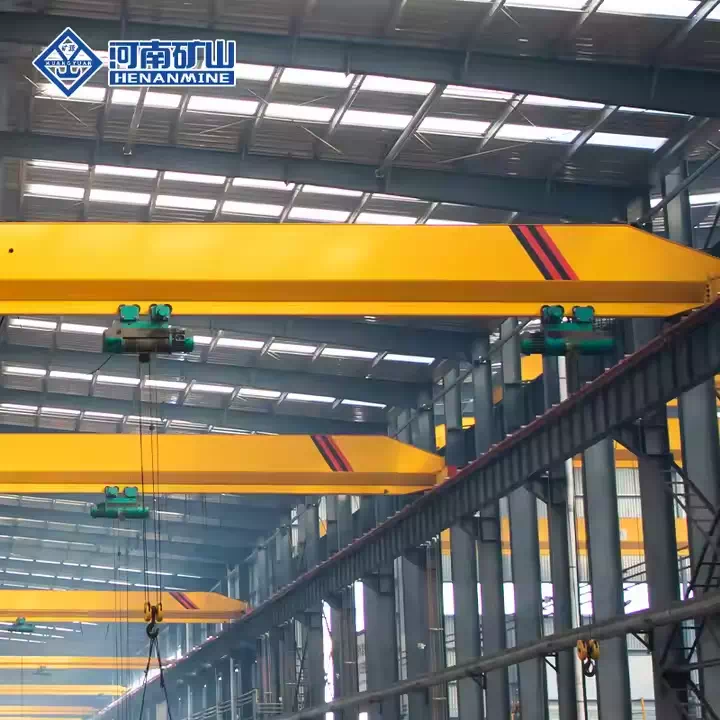
To answer “What is a single girder bridge crane?” fully, you must understand its main parts. Each component plays a critical role in safe and efficient operation.
1. Single Girder
The single steel beam (usually an I-beam or box girder) that spans the width of the work area. It supports the hoist and trolley and transfers the load to the end trucks.
2. End Trucks
Mounted at both ends of the girder, end trucks house wheels that run along the runway beams. They allow the entire bridge to move longitudinally (forward/backward) along the workshop.
3. Hois
The hoist is the lifting mechanism. In a single girder design, the hoist is underhung — meaning it hangs below the girder. Hoists can be:
Electric wire rope hoist (most common)
Chain hoist (lighter duty)
4. Trolley
The trolley moves the hoist laterally (side to side) along the bottom flange of the girder. Together, the trolley and hoist provide full two-dimensional movement over the entire rectangular floor area.
5. Runway System
Two parallel beams (often I-beams or rails) mounted on columns or the building structure. The end trucks ride on these runways, enabling bridge travel.
6. Controls
Operators control the crane via:
Pendant station (wired handheld)
Radio remote control (wireless, safer for visibility)
Cabin control (for very frequent use)
How Does a Single Girder Bridge Crane Work?
Imagine a rectangular warehouse. The runway beams run along the two long walls. The single girder bridge spans the short distance between them. Here is the movement breakdown:
Bridge travel – The entire crane moves forward/backward along the runway.
Trolley travel – The trolley moves left/right along the girder.
Hoist lift – The hoist raises or lowers the hook/load.
By combining these three motions, the operator can position a load anywhere within the rectangle covered by the crane. This is why overhead cranes are often called “bridge cranes” — they bridge between two runways.
Types of Single Girder Bridge Cranes
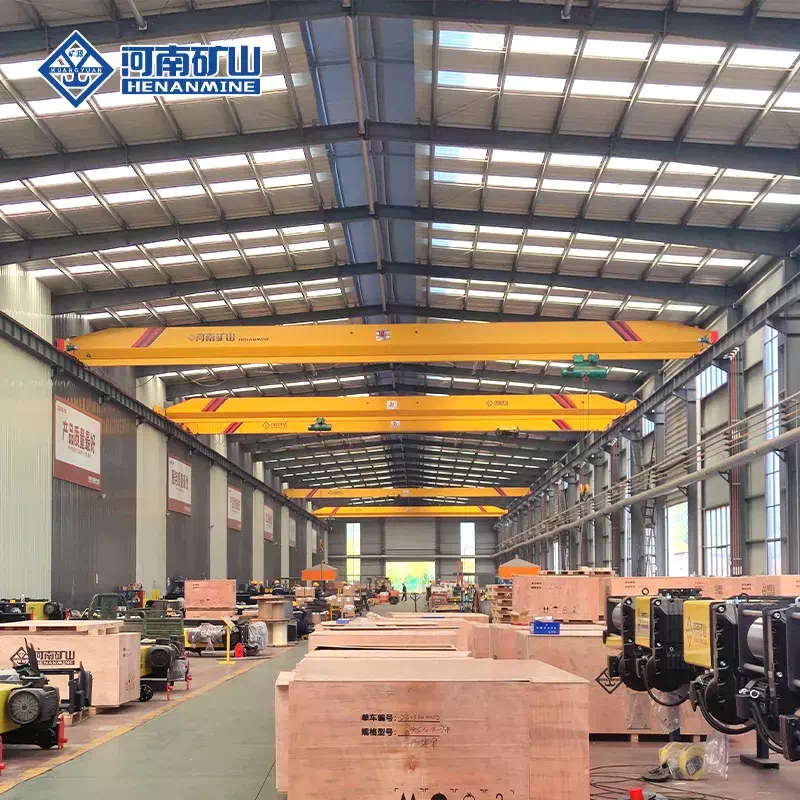
Not all single girder cranes are identical. Based on mounting and support, you’ll encounter:
A. Top-Running Single Girder
The end trucks ride on top of the runway beams.
Requires more headroom but offers smoother travel.
Most common in industrial buildings with high ceilings.
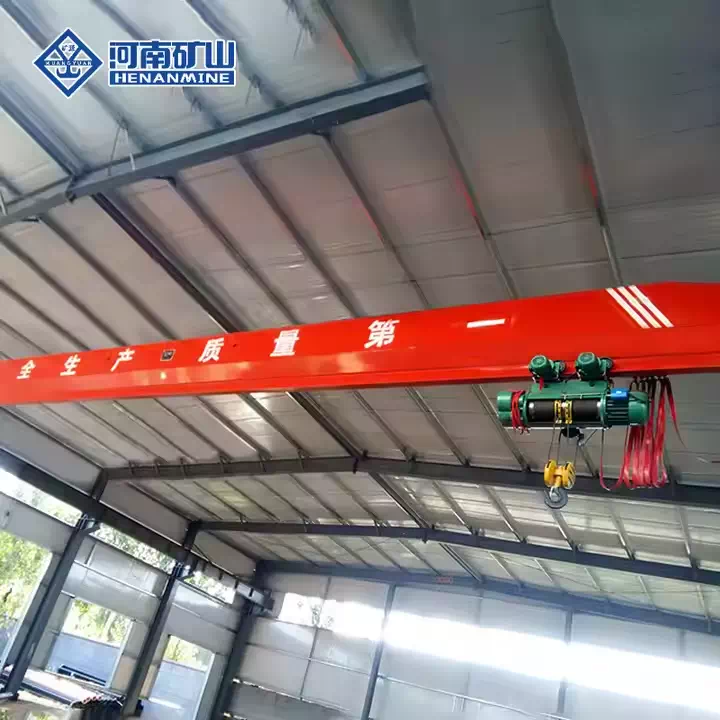
B. Under-Running (Underslung) Single Girder
The end trucks are suspended below the runway beams, which are attached to the building roof structure.
Saves headroom and does not require support columns.
Ideal for low-ceiling workshops.
C. Free-Standing (Floor-Supported) Single Girder
The runway is supported by freestanding columns, not the building.
Used when the building structure cannot carry crane loads.
Advantages of a Single Girder Bridge Crane
Why choose a single girder over other lifting equipment like jib cranes or gantry cranes? Here are the top benefits:
✅ Lower Initial Investment
Single girder cranes cost significantly less than double girder designs because they use less steel and simpler components.
✅ Lighter Dead Weight
Less steel means less weight on the building structure. Many workshops can add a single girder crane without reinforcing the roof or columns.
✅ Reduced Headroom Requirement
Because the hoist hangs below the girder, the overall hook height is lower. For buildings with height restrictions, an under-running single girder crane can maximize lifting height.
✅ Faster Installation
Fewer parts = quicker assembly and commissioning. Many suppliers offer pre-engineered kits.
✅ Easier Maintenance
With only one main beam and fewer moving parts, inspections and repairs are simpler and less frequent.
✅ Energy Efficient
Lighter structures require less power to move. Lower electricity bills over time.
Common Applications of Single Girder Bridge Cranes
You will find these cranes in:
Machine shops – Lifting heavy workpieces onto CNC machines.
Warehouses – Moving pallets, raw materials, or finished goods.
Assembly lines – Positioning sub-assemblies.
Steel service centers – Handling bundles of bars or sheets (up to 15 tons).
Automotive repair and manufacturing – Lifting engines, chassis parts.
Paper and textile rolls – Moving heavy rolls onto processing lines.
Construction material yards – Loading trucks with bricks, pipes, or concrete blocks.
Any facility that needs to move loads up to 20 tons across a rectangular area can benefit.
How to Choose the Right Single Girder Bridge Crane
When specifying a single girder crane, consider these parameters:
Capacity – Maximum load weight (allow 20% safety margin).
Span – Distance between runway centerlines.
Lifting height – From floor to maximum hook position.
Duty class – FEM/ISO or CMAA classification (e.g., Class A to F). Light assembly = low duty; heavy steel mill = high duty.
Control type – Pendant or remote?
Power supply – Festoon cable, conductor bar, or battery?
Frequently Asked Questions (FAQ)
Q1: Can a single girder bridge crane span 30 meters?
Yes, but only with a well-designed box girder. For spans over 30 meters, double girder is usually better.
Q2: What is the maximum capacity of a single girder crane?
Most manufacturers cap at 20 tons. Some custom designs go to 25 tons, but double girder is safer beyond 20 tons.
Q3: Can I use a single girder crane outdoors?
Yes, but you need weather protection: galvanized or painted steel, waterproof electricals, and wind restraints.
Henan Mining Cranes Co., Ltd. is a leading crane manufacturer in China. With decades of industry experience, we have become a trusted partner in the global material handling solution field. We are committed to providing comprehensive professional services tailored to your specific needs. We recommend the most suitable crane products, offer accurate quotations, and design customized solutions. Welcome to contact us.
Get In Touch
Email: sale@henanminecranes.com
Website: https://henanminecrane.com/
Whatsapp:16627702870